


Start with the name they know
A child’s own name is the most motivating word to write. It is short, familiar and used every day. Before tracing, practise recognising the letters: point to each one, say its name and find it in a book. That makes the worksheet feel like a reminder rather than a test.
Capital or lowercase?
Print names the way they appear in everyday writing: a capital first letter and lowercase for the rest. Uppercase letters are simpler to form, so some children start with an all-capital version and move to lowercase when their control improves. Avoid mixing a capital in the middle of a name.
A short practice routine
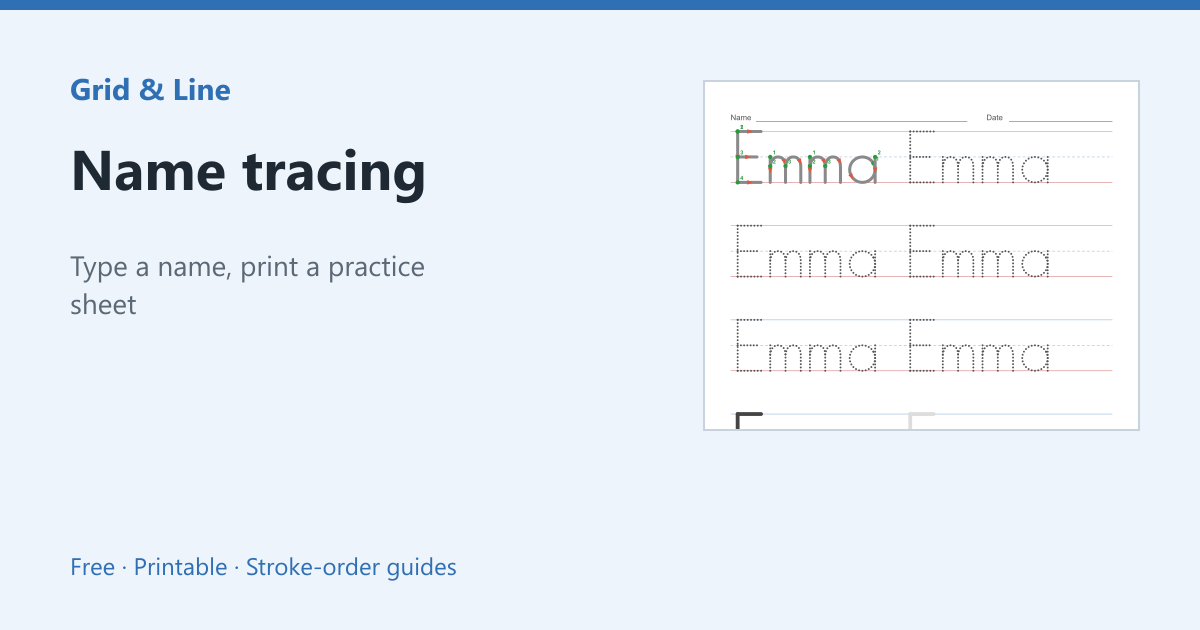
- Trace the model letter with a finger, starting at the green dot.
- Trace the dotted letters with a pencil.
- Write the name once in the empty row.
- Stop while it still feels easy.
Choosing a worksheet
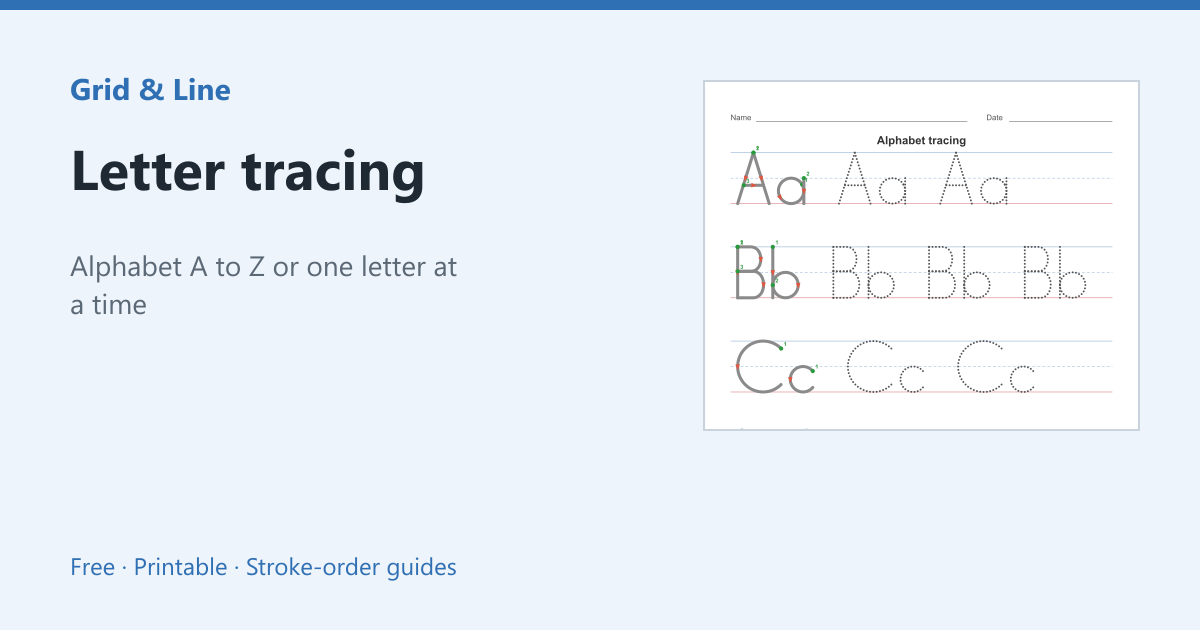
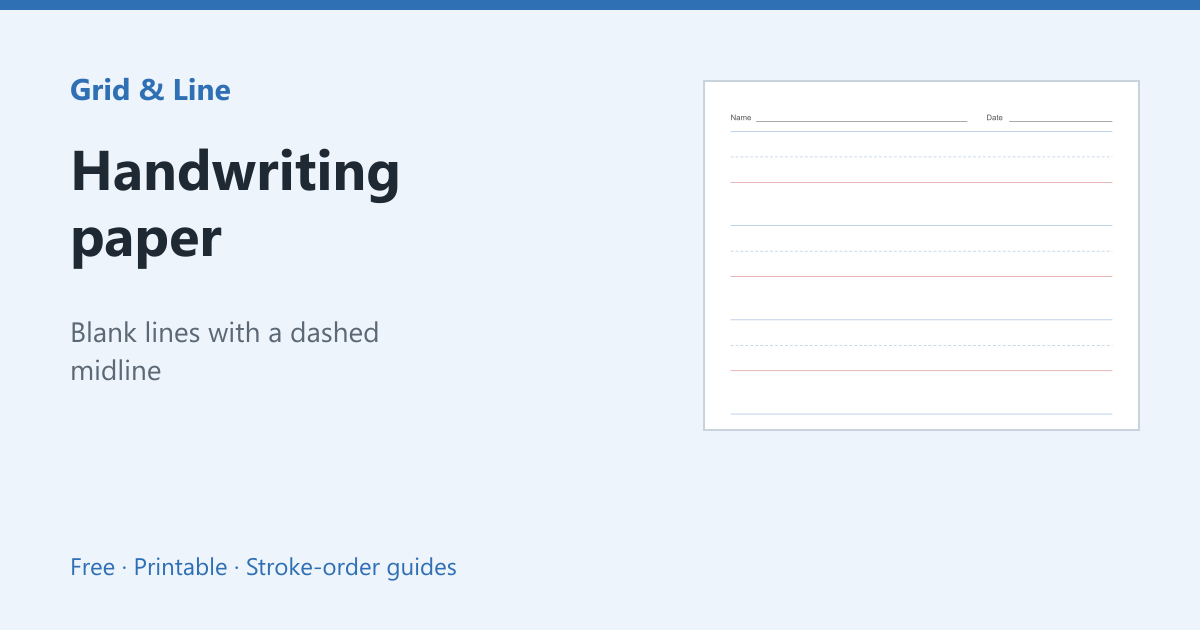
Use large letters for beginners and smaller lines as control improves. The name tracing worksheet generator prints a guided model, dotted rows and a blank row. Pair it with handwriting paper for free writing, or use letter tracing to practise individual letters.
In practice
A four-year-old can recognise her name but writes the letters in a random order. A short daily routine — finger trace, dotted trace, one independent copy — builds the sequence without turning practice into a power struggle.
Common mistakes
| Problem | Usually because | What to do |
|---|---|---|
| The child writes letters out of order | The whole name is practised at once | Practise one letter at a time, then join |
| The name is squeezed | The letters are too large for the line | Use a larger line or a smaller font |
| Practice ends in tears | Sessions are too long | Stop after 5–10 minutes |
 Name tracing
 Letter tracing
 Handwriting paper