


What sight words are
Sight words are high-frequency words that readers recognise without decoding. Some are irregular (the, was, said), and some are regular but appear so often that instant recognition speeds up every sentence. Learning them by sight frees attention for meaning.
Dolch and Fry
The Dolch list is organised by grade: pre-K, kindergarten, first, second and third grade, with 220 service words and 95 nouns. The Fry list is ordered by frequency and runs to 1,000 words. Most classrooms use one list or a mix of both.
Practising at home
- See it: show the word on a card and read it together.
- Trace it: trace the word with a finger, then a pencil.
- Write it: write the word once without a model.
- Use it: say a short sentence that contains the word.
Print sight-word worksheets
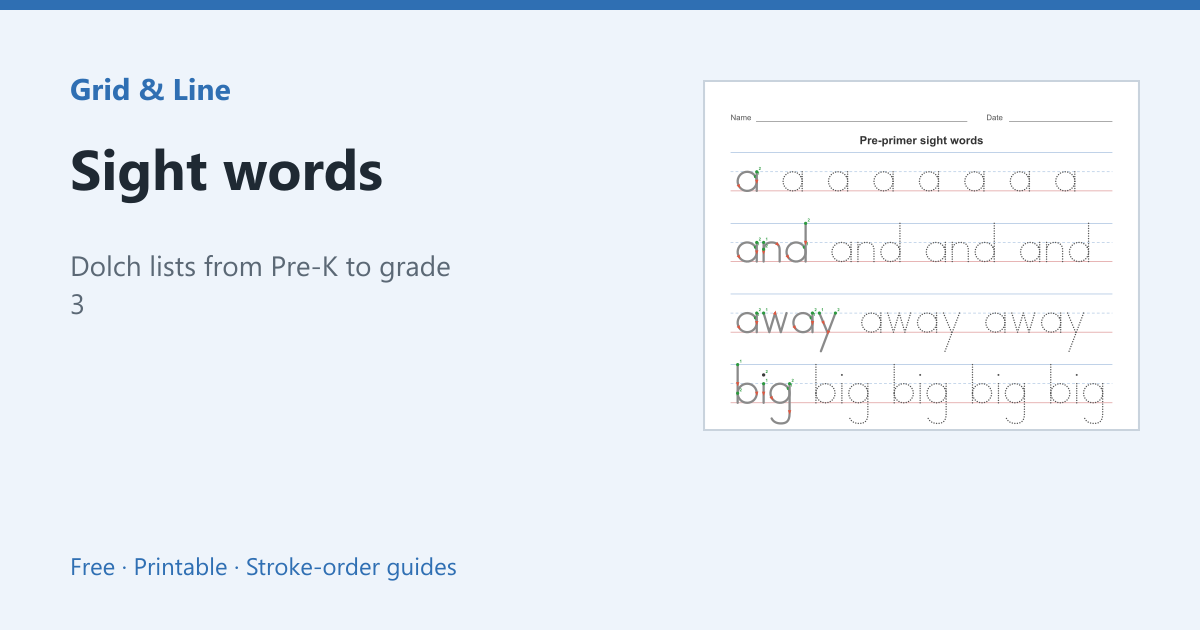
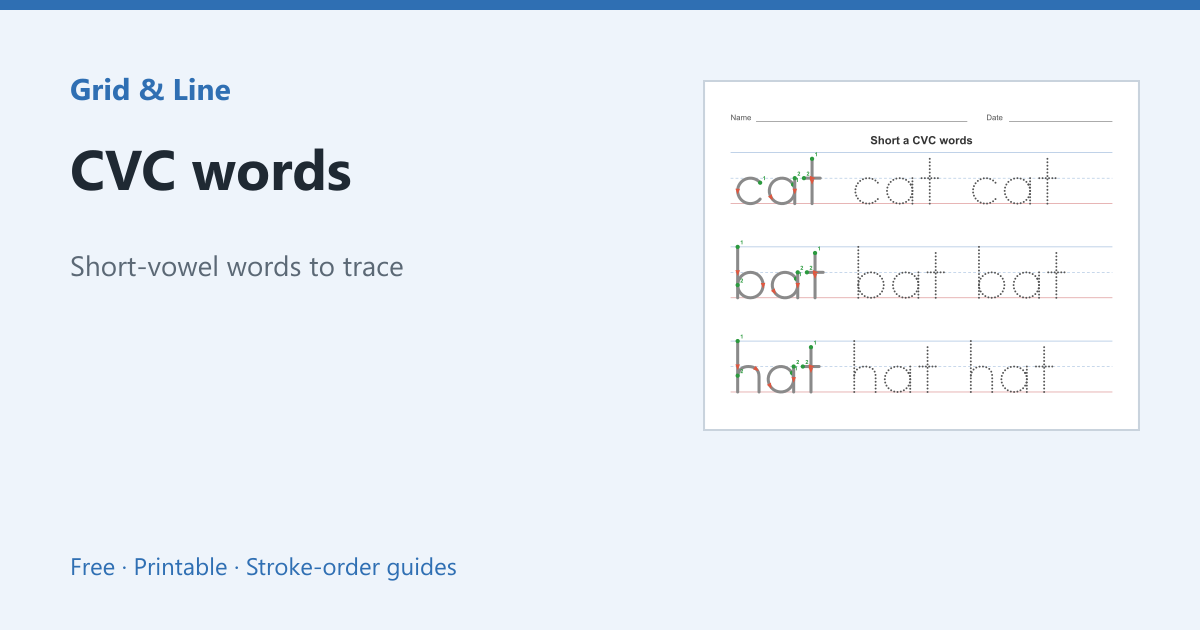
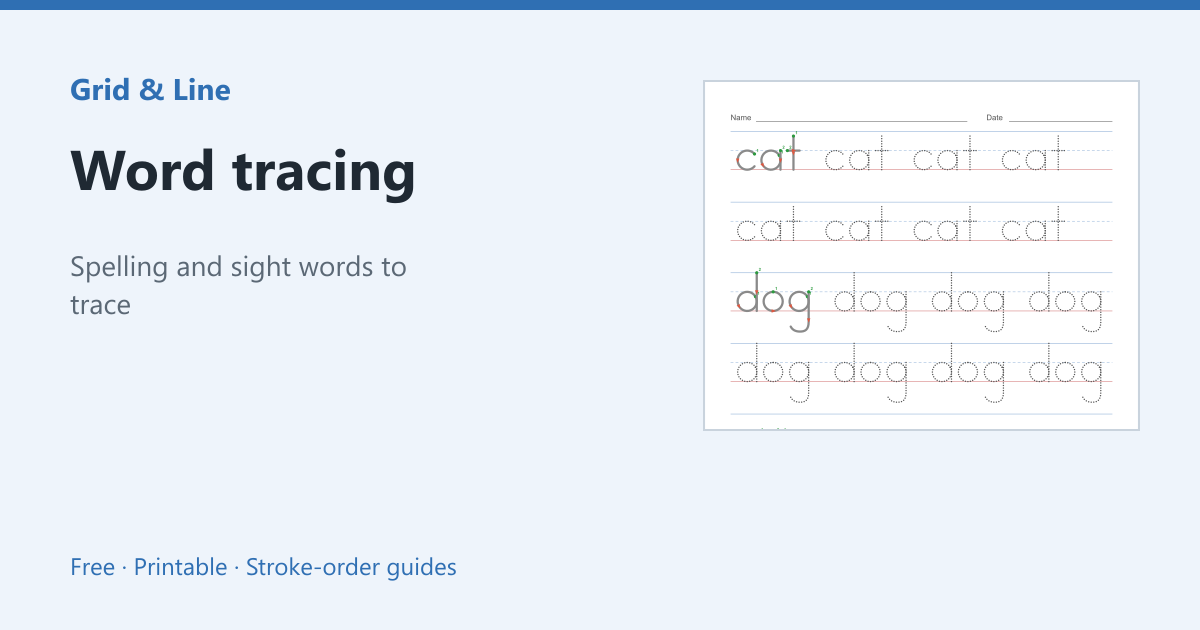
The sight-words hub links Dolch lists for pre-K to grade 3, and each list makes a printable tracing page. For short decodable words, use CVC words; for any other word list, use the word tracing generator.
In practice
A kindergarten class learns five sight words a week. Reading the word, tracing it, writing it and saying a sentence takes five minutes a day and gives the child four different ways to remember it. Copying a list once does not.
Common mistakes
| Problem | Usually because | What to do |
|---|---|---|
| The child memorises the order, not the word | The list is always shown in the same sequence | Shuffle the cards |
| Tracing does not transfer to reading | Only copying, no recall | Cover the model and ask for the word |
| Too many words at once | A long list is assigned | Teach 3–5 words per week |
 Sight words
 CVC words
 Word tracing